Nepal’s Deadly Floods: How WHH Is Reaching Cut‑Off Communities
Catastrophic flash floods have devastated northern Nepal, killing more than 1,100 people and cutting off remote mountain communities. Two weeks on, thousands more are still missing. Welthungerhilfe (WHH) and its local partners are working to reach survivors with food and essential supplies, while addressing growing risks around clean water and sanitation.

At a glance
- On August 26, the collapse of a massive section of glacier and rock high in the Himalayas triggered devastating flash floods in northern Nepal, sweeping away entire villages and destroying roads and bridges.
- At least 10,000 households urgently need assistance.
- WHH teams and local partners are delivering food and hygiene supplies as an immediate response to the disaster, with a particular focus on hard-to-reach communities.
What happened in Nepal?
The floods have left thousands of families without homes, belongings and livelihoods. In some of the worst-affected mountain communities, roads have disappeared, electricity and communications have been disrupted, and entire villages have been cut off from outside assistance. Farmland and livelihoods have been destroyed.
The scale of the disaster is still becoming clear as rescue workers continue to reach isolated areas. For those affected, the immediate concerns are basic: finding missing relatives, securing enough food and clean drinking water, and finding a safe place to stay both in short and long term. Countless international travelers who were in the region at the time of the disaster also continue to be missing.

As the emergency continues, disease is another threat that’s growing. WHH water, sanitation and hygiene specialist Biju Dangol has visited temporary shelters in Rasuwa and reports extremely difficult sanitary conditions. “Some children are already suffering from diarrhea, and bacteria have been detected in drinking water in neighboring Nuwakot District,” she told us.
The floods come amid growing concern about the vulnerability of Himalayan communities – and mountain communities worldwide – to a warming climate. Rising temperatures are changing glaciers and high-mountain environments, increasing the risks facing communities downstream.

“Nepal is in shock. Many people are still searching for relatives, entire villages have been swept away and some places are almost completely cut off from the outside world. At the same time, we are seeing enormous solidarity. Communities, local organizations and volunteers are coming together and doing everything they can to reach those affected. Right now, people urgently need clean drinking water, food, hygiene supplies and safe shelter.”
Tabea Seiz WHH Program Manager in NepalWhy are some communities so difficult to reach?
Home to the world’s highest peak, Nepal is also one of the world’s most mountainous countries, and reaching survivors in remote valleys is one of the biggest challenges facing the emergency response. Some of the hardest-hit communities are in Rasuwa District, close to Nepal's border with Tibet. The main road through the Bhotekoshi Valley has been largely washed away, while smaller mountain roads do not reach every settlement. Some communities can currently only be reached by helicopter.
This means that while assistance has reached more accessible areas, families in isolated mountain communities have had to wait much longer for essential supplies. In some places, food is beginning to run out. WHH is therefore focusing on reaching communities that have been cut off and where needs remain particularly high.
How are we responding?
Following the floods, our teams and partners immediately began assessing needs and organizing emergency assistance, and there are several areas we are particularly focusing on:
-
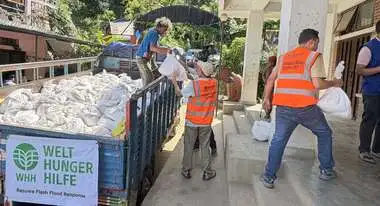
Getting food to remote communities: Food is one of the most urgent priorities. Welthungerhilfe and its partners have procured emergency food packages containing around 35 kilograms of staple foods, including rice, lentils, cooking oil, sugar and salt. The supplies are being distributed to affected communities, including people living in remote areas that have been difficult to reach since the floods.
-
Protecting access to clean water and hygiene: Contaminated water and inadequate sanitation increase the risk of waterborne diseases spreading. Together with our partners, we are expanding our response to include essential hygiene supplies such as soap, toothbrushes and toothpaste, laundry detergent, towels and menstrual hygiene products. Because safe drinking water, sanitation and hygiene will be critical to preventing this natural disaster from developing into a wider public health emergency.
-
Working with local communities for the longer term: Local organizations, volunteers and communities are at the heart of the response, helping reach people in the most remote areas. WHH has worked in Nepal since 1972, and we are here to stay, working with our local partners and supporting communities through the emergency and the recovery ahead.
What can you do?
Even from thousands of miles away, there are ways to help keep attention on what is happening in Nepal.
Stay informed
The situation is changing quickly as previously inaccessible communities are reached and the full scale of the damage becomes clearer. Follow WHH on LinkedIn for more updates.
Share reliable information
Keeping attention on Nepal can help ensure that the needs of affected communities do not disappear from public attention once the headlines move on.
Learn about the longer-term impact
Disasters like this do not end when the immediate emergency is over. As climate change increases risks in Nepal’s fragile mountain regions, communities face growing uncertainty. Families affected by the floods may spend months or years rebuilding homes, restoring farmland and recovering their livelihoods.